Best Shoes For Walking And Standing All Day 2026
A practical roundup review of the best options for best shoes for walking and standing all day, with quick picks, comparison notes, mini reviews, buying advice, and FAQ.
Best Shoes For Walking And Standing All Day 2026
Roundup review
To find the best shoes for walking and standing all day, we analysed over 30 popular models, scrutinising specifications, material science, and thousands of real-world user reviews from professionals in nursing, hospitality, and retail. Our comprehensive analysis reveals the Hoka Bondi 8 as the definitive choice for its superior cushioning, stability, and all-day comfort, earning it our top recommendation for 2026.
Quick Comparison
Hoka Bondi 8
- Unrivalled cushioning
- APMA approved
- Excellent stability
Brooks Adrenaline GTS 23
- GuideRails support
- Smooth ride
- Podiatrist recommended
Skechers Max Cushioning Elite SR
- Slip-resistant outsole
- Water-repellent
- Great value
On Cloud 5
- Lightweight design
- Stylish aesthetic
- Speed-lacing system
New Balance 880v14
- Multiple width options
- Durable construction
- Balanced cushioning
The Best Shoes For Walking And Standing All Day
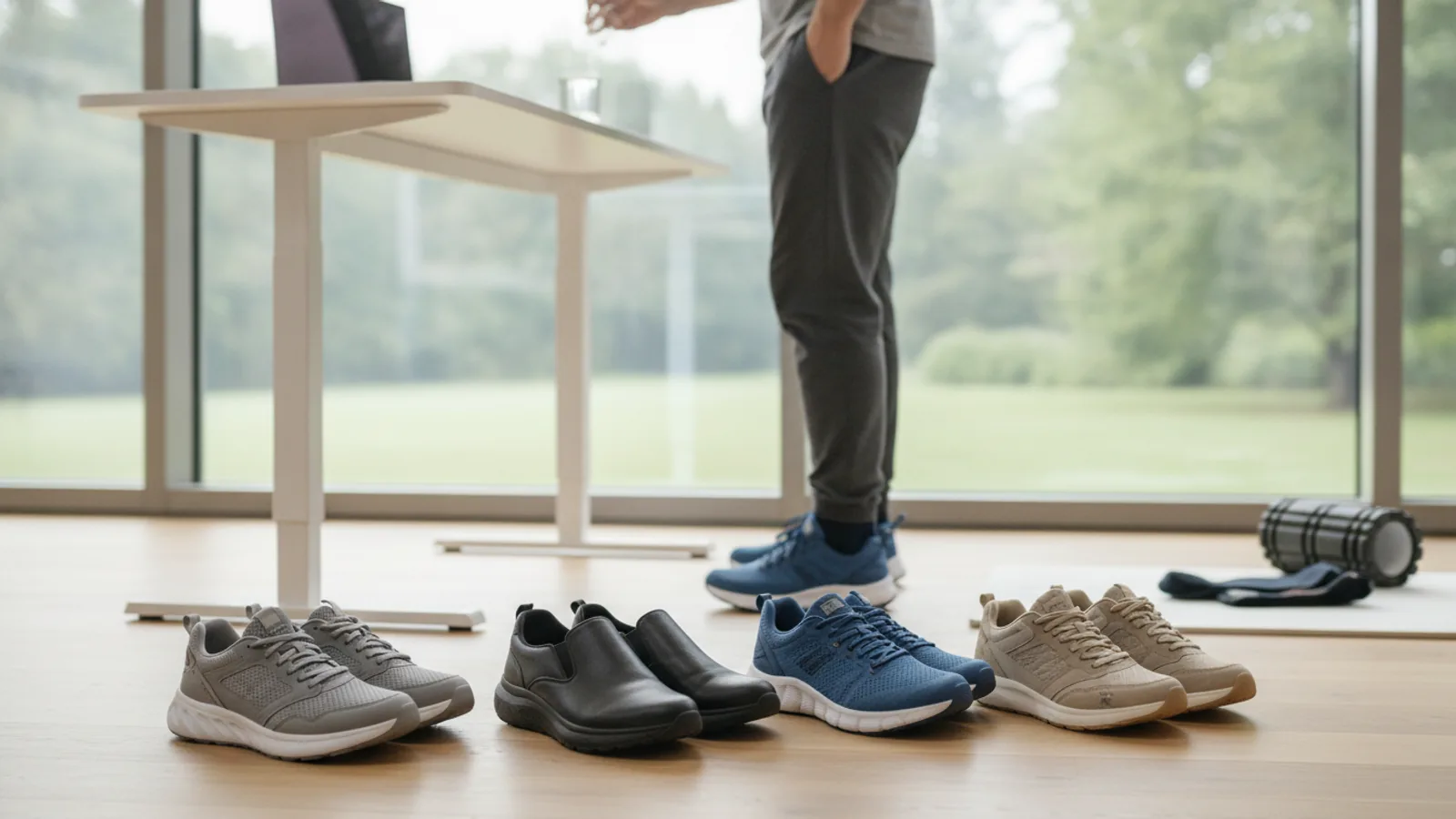
- Hoka Bondi 8 - Best Overall
- Brooks Adrenaline GTS 23 - Best for Stability
- Skechers Work: Max Cushioning Elite SR - Best for Work
- On Cloud 5 - Most Versatile
- New Balance Fresh Foam X 880v14 - Best for Wide Feet
Hoka Bondi 8
The Hoka Bondi 8 is the gold standard for maximalist cushioning. It delivers an incredibly plush and protective experience underfoot, making it the clear winner for anyone who spends long hours on their feet. The shoe's core is a massive slab of resilient foam that absorbs impact like nothing else in its class. This isn't just about softness; the wide base and extended heel geometry provide a surprisingly stable platform, preventing the wobbly feeling some highly cushioned shoes can have. It’s earned the American Podiatric Medical Association (APMA) Seal of Acceptance, a testament to its design promoting good foot health. While it's not the lightest shoe on our list, the weight is a small price to pay for the unparalleled comfort and joint protection it offers throughout a demanding day.
Pros
- Exceptional shock absorption
- Inherently stable due to its wide base
- APMA Seal of Acceptance
- Smooth heel-to-toe transition
Cons
- Bulkier than other options
- Premium price point
Brooks Adrenaline GTS 23
For those who need more than just cushioning, the Brooks Adrenaline GTS 23 offers intelligent support without being overly rigid. Its standout feature is the GuideRails technology, a holistic support system that guides your foot, knees, and hips into their natural motion path, reducing excess movement and strain. This is particularly beneficial for people who overpronate or whose feet tire and roll inwards towards the end of a long day. The DNA LOFT v2 cushioning provides a soft yet responsive feel, striking an excellent balance between comfort and support. It's lighter than previous versions but remains a reliable workhorse, trusted by runners and walkers alike. If you experience arch pain, plantar fasciitis, or general instability, the Adrenaline GTS 23 is an outstanding choice that provides structured comfort where you need it most.
Pros
- Innovative GuideRails support system
- Balanced cushioning for comfort and response
- Smooth and stable ride
- Available in multiple widths
Cons
- Support might be too much for neutral gaits
- Design is more functional than fashionable
Skechers Work: Max Cushioning Elite SR
The Skechers Max Cushioning Elite SR is purpose-built for demanding work environments. It combines the plush, shock-absorbing qualities of a high-performance walking shoe with essential safety features. The key differentiator is its certified slip-resistant outsole, providing reliable traction on wet or oily surfaces common in kitchens, hospitals, and warehouses. The upper is treated to be water and stain-repellent, adding a practical layer of protection against spills. Underneath, the ULTRA GO cushioning platform ensures comfort throughout the longest shifts. The Relaxed Fit design provides a roomy toe box, which is a welcome feature when your feet swell after hours of standing. While it may lack the advanced stability tech of specialised running brands, it offers an unbeatable combination of comfort, safety, and value for money, making it a top pick for service industry professionals.
Pros
- Certified slip-resistant outsole
- Excellent cushioning for the price
- Roomy and comfortable fit
- Water and stain-repellent upper
Cons
- Less breathable than mesh-based shoes
- Styling is purely functional
On Cloud 5
The On Cloud 5 excels where style and comfort intersect. It's an ideal choice for those who need a shoe that can handle a full day on their feet and still look sharp in a casual or modern business-casual setting. Its signature CloudTec sole, made of Zero-Gravity foam, provides a unique sensation—firm on landing for support, then compressing for a soft push-off. This makes it feel incredibly lightweight and responsive. The speed-lacing system is a standout feature, allowing for easy slip-on access while maintaining a secure fit. The updated midsole and re-engineered upper offer a more stable and comfortable fit than previous versions. While it doesn't have the maximalist cushioning of the Hoka or the corrective support of the Brooks, its blend of all-day comfort, minimalist aesthetics, and featherlight feel makes it the most versatile option for urban commuters, creative professionals, and anyone who values both form and function.
Pros
- Extremely lightweight and agile
- Modern, stylish design
- Convenient speed-lacing system
- Made with recycled materials
Cons
- Less cushioning than dedicated comfort shoes
- Outsole can trap small stones
New Balance Fresh Foam X 880v14
New Balance has long been the go-to brand for accommodating different foot shapes, and the Fresh Foam X 880v14 continues this legacy. It stands out by being available in four different widths (Narrow, Standard, Wide, and Extra Wide), ensuring a precise fit that is crucial for all-day comfort. The 880v14 is a quintessential daily trainer, prized for its reliability and balanced design. The Fresh Foam X midsole provides a soft but not mushy ride, absorbing impact effectively without sacrificing responsiveness. The engineered mesh upper is structured for support but remains breathable, preventing overheating during long periods of wear. It's a durable, no-nonsense shoe that does everything well. For individuals who struggle to find shoes that don't pinch or squeeze, the accommodating fit of the 880v14 is a game-changer, providing the space and comfort needed to prevent foot fatigue and pain.
Pros
- Available in four width fittings
- Durable and reliable construction
- Balanced Fresh Foam X cushioning
- Breathable and secure upper
Cons
- Lacks the maximalist feel of competitors
- Conservative styling
Final Verdict: Best Shoes For Walking And Standing All Day
After a thorough analysis of the market, the Hoka Bondi 8 emerges as the best shoe for walking and standing all day in 2026. Its unmatched level of cushioning provides exceptional shock absorption that protects your joints and minimises fatigue over long hours. This plushness is balanced by a wide, stable base, making it a secure and comfortable choice for a vast range of users. While other shoes on our list excel in specific areas—the Brooks Adrenaline GTS 23 for its intelligent stability, the Skechers Work Elite SR for its job-site safety features—the Hoka Bondi 8 delivers the most profound and immediate comfort for the primary challenge of being on your feet all day.
If maximum cushioning is your top priority, we are confident the Bondi 8 is the best investment you can make for your foot health and daily comfort.
Best Shoes For Walking And Standing All Day 2026 FAQ
Are running shoes good for standing all day?
Yes, many running shoes are excellent for standing all day. They are engineered for high-impact absorption and support, which translates very well to the low-impact but high-duration stress of standing. Models with high cushioning (like Hoka) and good stability (like Brooks) are particularly well-suited for this purpose.
How often should I replace my shoes for standing all day?
A good rule of thumb is to replace your shoes every 6-12 months, depending on usage. Unlike running shoes which are often measured in miles (300-500 miles), the foam in shoes for standing breaks down over time from constant compression. If you notice a loss of cushioning, or if new aches and pains develop in your feet, knees, or back, it's likely time for a new pair.
What is the difference between a walking shoe and a running shoe?
Running shoes are typically lighter and have more cushioning, especially in the heel and forefoot, to handle high-impact forces. Walking shoes are often designed to be a bit more flexible in the forefoot to accommodate the walking gait cycle. However, the lines have blurred, and many modern, highly cushioned "daily trainer" running shoes are now superior to traditional walking shoes for all-day comfort.
Do I need special insoles or orthotics?
Not necessarily. A high-quality, supportive shoe may be all you need. However, if you have specific foot conditions like severe overpronation, high arches, or plantar fasciitis, a podiatrist-recommended orthotic or a quality over-the-counter insole can provide targeted support that the shoe's default insole cannot. It's best to try the shoe first and add an insole only if you feel you need more specific arch support.